In the Set Theory of Mathematics, the union, intersection, difference and symmetric difference operations are defined. Python implements them with following operators −
Union Operator (|)
The union of two sets is a set containing all elements that are in A or in B or both. For example,
{1,2}∪{2,3}={1,2,3}
The following diagram illustrates the union of two sets.
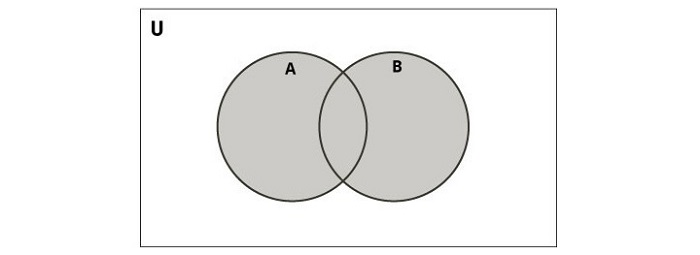
Python uses the "|" symbol as a union operator. The following example uses the "|" operator and returns the union of two sets.
Example
It will produce the following output −
Union of s1 and s2: {1, 2, 3, 4, 5, 6, 7, 8}
Intersection Operator (&)
The intersection of two sets AA and BB, denoted by A∩B, consists of all elements that are both in A and B. For example,
{1,2}∩{2,3}={2}
The following diagram illustrates intersection of two sets.
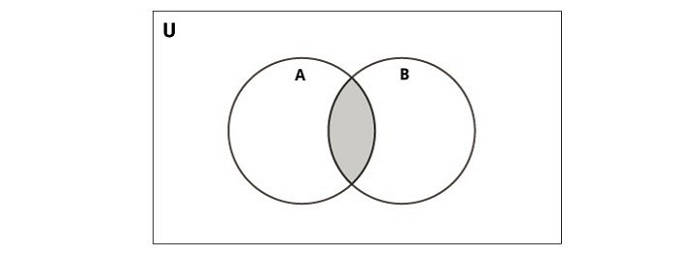
Python uses the "&" symbol as an intersection operator. Following example uses & operator and returns intersection of two sets.
It will produce the following output −
Intersection of s1 and s2: {4, 5}
Difference Operator (-)
The difference (subtraction) is defined as follows. The set A−B consists of elements that are in A but not in B. For example,
If A={1,2,3} and B={3,5}, then A−B={1,2}
The following diagram illustrates difference of two sets −
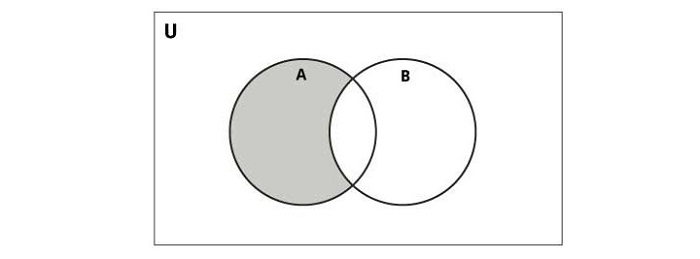
Python uses the "-" symbol as a difference operator.
Example
The following example uses the "-" operator and returns difference of two sets.
It will produce the following output −
Difference of s1 - s2: {1, 2, 3}
Difference of s2 - s1: {8, 6, 7}
Note that "s1-s2" is not the same as "s2-s1".
Symmetric Difference Operator
The symmetric difference of A and B is denoted by "A â–³ B" and is defined by
A △ B = (A – B) ∪ (B – A)
If A = {1, 2, 3, 4, 5, 6, 7, 8} and B = {1, 3, 5, 6, 7, 8, 9}, then A â–³ B = {2, 4, 9}.
The following diagram illustrates the symmetric difference between two sets −
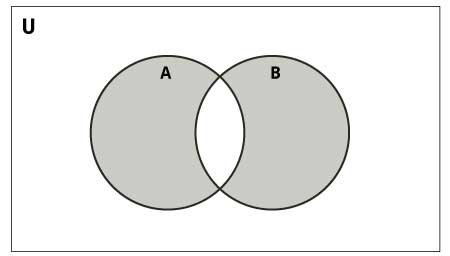
Python uses the "^" symbol as a symbolic difference operator.
Example
The following example uses the "^" operator and returns symbolic difference of two sets.
It will produce the following output −
Difference of s1 - s2: {1, 2, 3}
Difference of s2 - s1: {8, 6, 7}
Symmetric Difference in s1 and s2: {1, 2, 3, 6, 7, 8}


The End! should you have any inquiries, we encourage you to reach out to the Vercaa Support Center without hesitation.